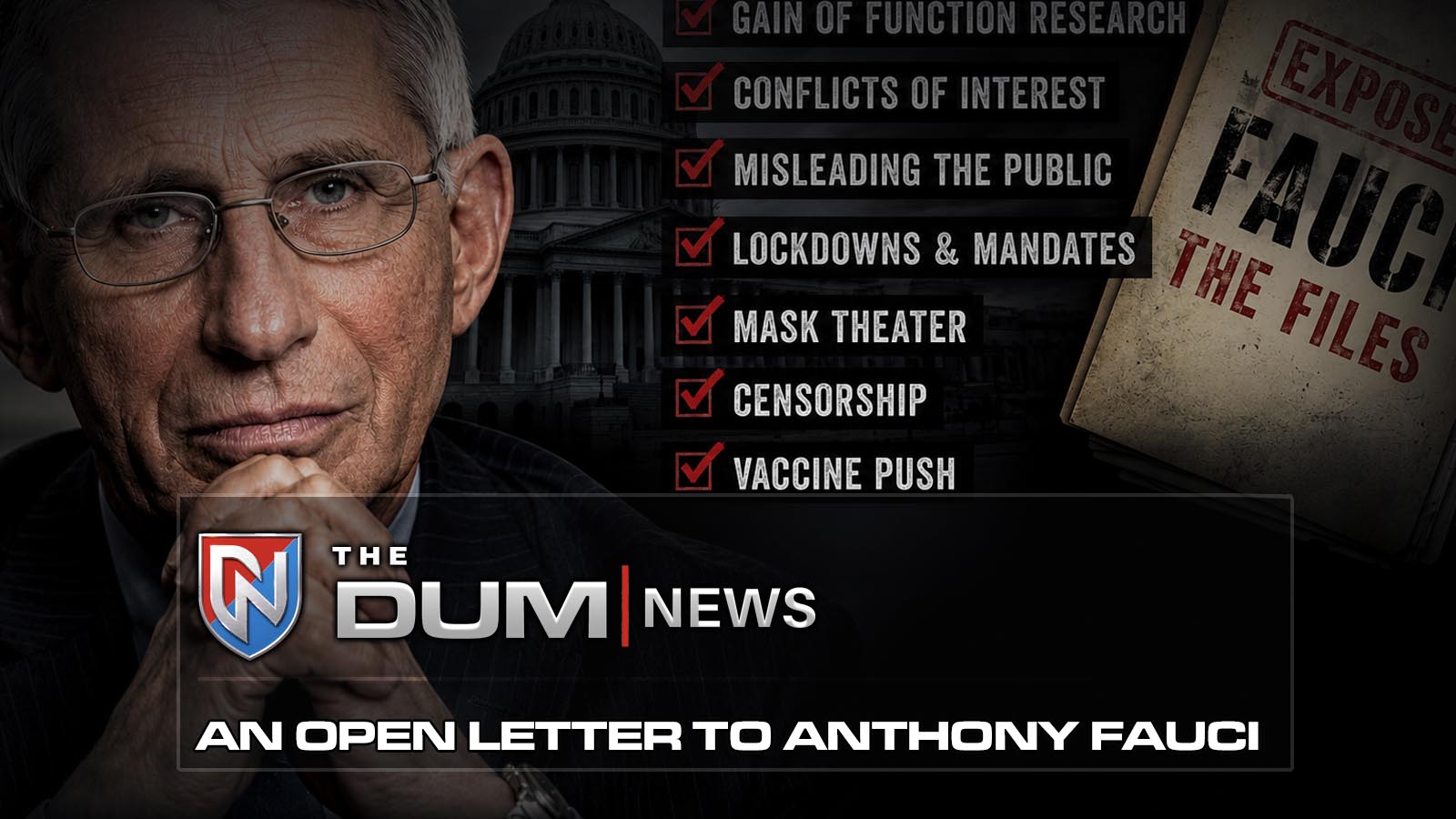
Anthony Fauci,
Your long tenure at NIAID began in the early 1980s as the AIDS crisis unfolded. Under President Reagan the federal response was criticized, often justifiably, for bureaucratic slowness and political caution. You were not a bystander. You were a senior official who helped shape research priorities, trial designs, and public messaging. Activists correctly demanded faster access to experimental therapies and more aggressive funding. Some of those activists later praised you for adapting. Others never forgave the early rigidity, the bureaucratic friction, and the human cost of delay. You learned from that era how to manage controversy, how to position yourself as both insider and reformer, and how to survive institutional pressure. That skill set served you well later. It did not erase the early failures or the pattern of institutional self protection that accompanied them.

Decades later the same institutional instincts reappeared on a far larger stage. During COVID 19 you became the most visible scientific official in the country. You told the public that you represented science. “I am science” was not a casual aside. It was the posture. When evidence shifted on masks, aerosol transmission, school closures, natural immunity, or the origins of the virus, the response was rarely humble correction. It was often doubling down, reframing, or dismissing dissent as dangerous. Lab leak hypotheses were treated as fringe or racist for an extended period even as the possibility remained open and the nearest laboratory of concern had a documented history of risky coronavirus work. Gain of function research debates were met with carefully lawyered denials rather than transparent accounting. Vaccine efficacy against infection and transmission was overstated early, then walked back without the same volume of certainty that accompanied the original claims. Mandates and social coercion followed the messaging. People lost jobs, schooling, and social standing for questioning the official line. Many of those questions later proved reasonable.
You appeared on talk shows and in friendly media repeatedly. The format rewarded certainty and moral framing more than provisional science. Skeptics were cast as anti science. When data changed, the prior certainty was rarely treated as a costly error that required institutional reckoning. The public noticed. Trust is not restored by insisting the critics were the problem. Trust erodes when officials claim the mantle of science while practicing politics, risk management, and narrative control.
The comparison to earlier collapses of institutional credibility is not idle. After the assassination of President Kennedy, many Americans never fully recovered confidence that their government told them the full truth about consequential events. The long wars that followed September 11 further exhausted the public’s willingness to accept official rationales at face value. Forever wars, shifting justifications, and the human and fiscal costs left a residue of skepticism toward experts and agencies that claimed superior knowledge while delivering mixed or disastrous results. You did not invent that broader distrust. You accelerated a parallel collapse in the domain of public health and biomedical science. When the country’s leading infectious disease official becomes the symbol of overreach, opacity, and selective certainty, the damage spreads beyond any single policy. People stop distinguishing between rigorous science and the institutional apparatus that claims to speak for it. That is the betrayal.

Science is a method: hypothesis, evidence, replication, revision, and the willingness to be wrong in public. It is not a priesthood, and it is not a brand that can be worn by any individual. When an official presents himself as the embodiment of science, every subsequent error or political calculation becomes an indictment of the enterprise itself. You helped create the conditions in which large numbers of citizens now view public health pronouncements with the same wariness once reserved for wartime intelligence briefings. That outcome was not inevitable. It followed from choices: the suppression of debate, the moralization of compliance, the reluctance to admit uncertainty in real time, and the fusion of scientific authority with administrative power.
You will likely dismiss this letter as partisan or uninformed. That reflex is part of the problem. The record of shifting guidance, contested research funding, and the personalization of scientific authority is not a conspiracy theory. It is public. The human costs, educational loss, excess non COVID mortality from delayed care, damaged social trust, and polarized reception of future vaccines and interventions, are measurable. You did not act alone. You operated inside a larger apparatus of agencies, journals, media, and political incentives. But you were the most recognizable figure, and you accepted the role of national explainer and enforcer of the preferred narrative.
The country needed transparent, provisional, evidence driven public health. What it received, too often, was institutional defense, media performance, and the assertion that dissent equaled danger. Faith in science is not restored by demanding deference. It is restored by officials who treat the public as adults capable of hearing uncertainty, trade offs, and error. You chose a different path. The distrust that followed is not an accident. It is a consequence.
The letter is written. The record remains.
A citizen who remembers what science is supposed to be.
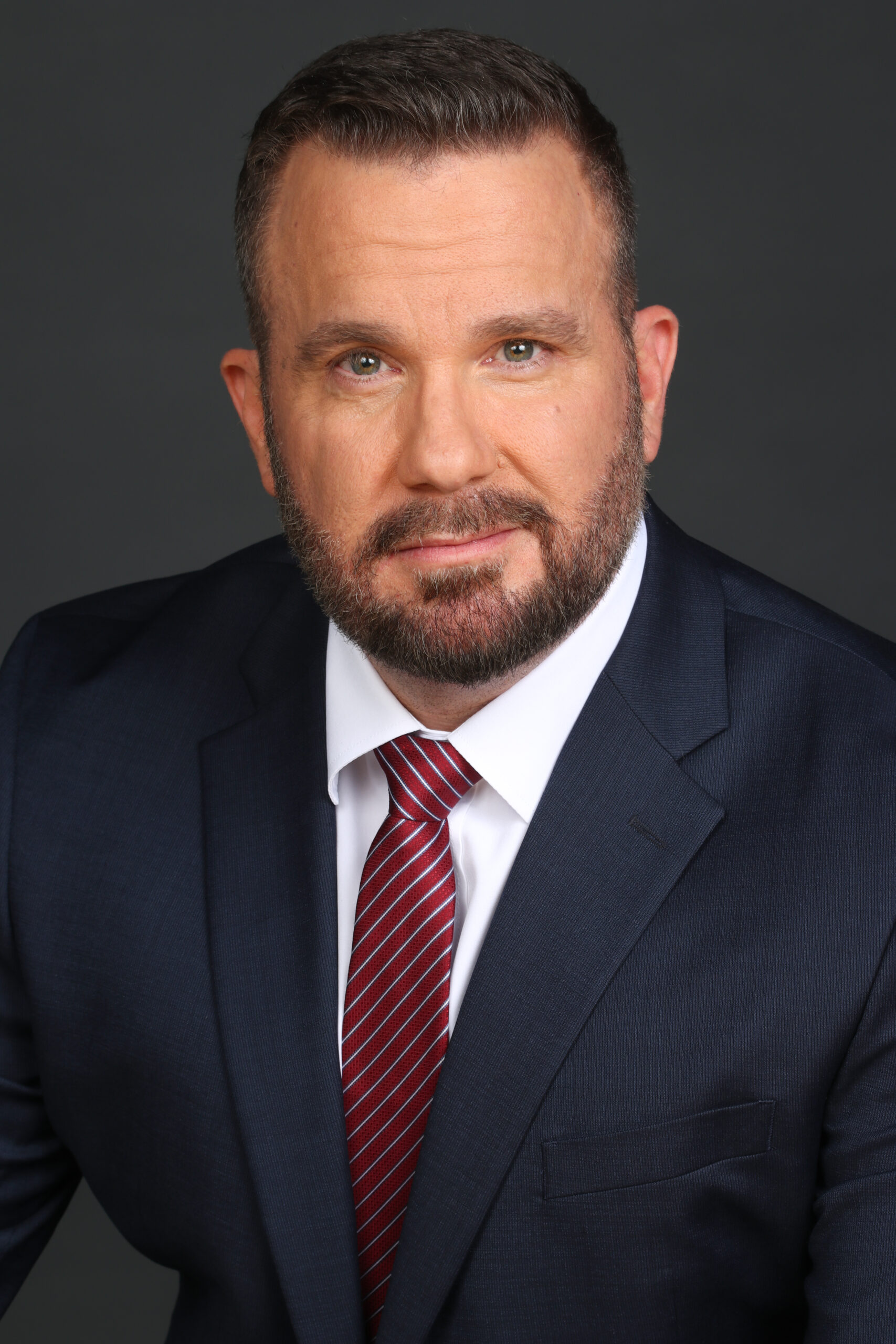
“The Don’t Unfriend Me Show” explores a broad range of political themes, from satire to serious topics, with Matt Speer, a Navy Intel veteran, husband, and father, leading the show. Matt shares his views to stimulate constructive discussions. The show aims to provide a balanced perspective on complex issues, welcoming participants of all political affiliations to share their unique viewpoints.